
June 10, 2026
Why Is My OTF Slider Hard to Push?
An OTF slider is usually hard to push because lint, dried oil, grit, cold-thickened lubricant, or drop-related misalignment increases friction in the switch tra
Read Guide →Practical buying and product guidance from TOP KNIVES.
An OTF slider is usually hard to push because lint, dried oil, grit, cold-thickened lubricant, or drop-related misalignment increases friction in the switch tra
Read Guide →Fix a sticky OTF slider with a simple clean-and-dry method: blow out lint, flush lightly with isopropyl alcohol or knife-safe cleaner, let it dry…
Read Guide →Yes, water can damage an OTF knife if moisture stays inside the handle. Learn the safest cleanup steps, when to stop using it, and…
Read Guide →A compact, OTF-specific cleaning method for removing dirt from the mechanism safely, with exact tools, stop points, and maker-approved solvent guidance.
Read Guide →Use short bursts of compressed air and a soft dry brush to remove lint from an OTF knife. Learn the safest steps, what to…
Read Guide →Yes, but only as a brief rinse for salt, sweat, mud, or sticky residue. Learn when water helps, when to avoid it, how to…
Read Guide →Sharpen a serrated OTF blade with a tapered rod from the beveled side only, using light pressure and keeping grit out of the mechanism.…
Read Guide →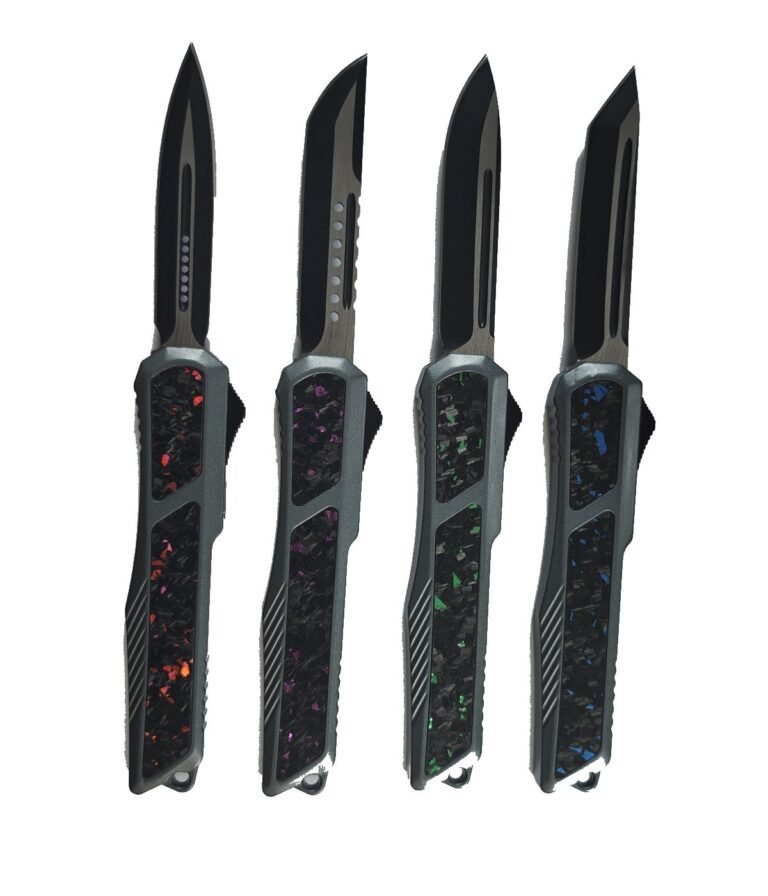
Yes—sharpen a single-edge tanto OTF by treating the main edge and front edge as two separate straight sections, matching the factory bevel, and cleaning…
Read Guide →Yes, you can sharpen a double-edge OTF blade at home as a light touch-up. Learn the safest method, angle matching, burr control, function checks,…
Read Guide →Most OTF knives sharpen best at 18 to 20 degrees per side. Use 20 DPS for durability, 18 DPS as the default, and 17…
Read Guide →